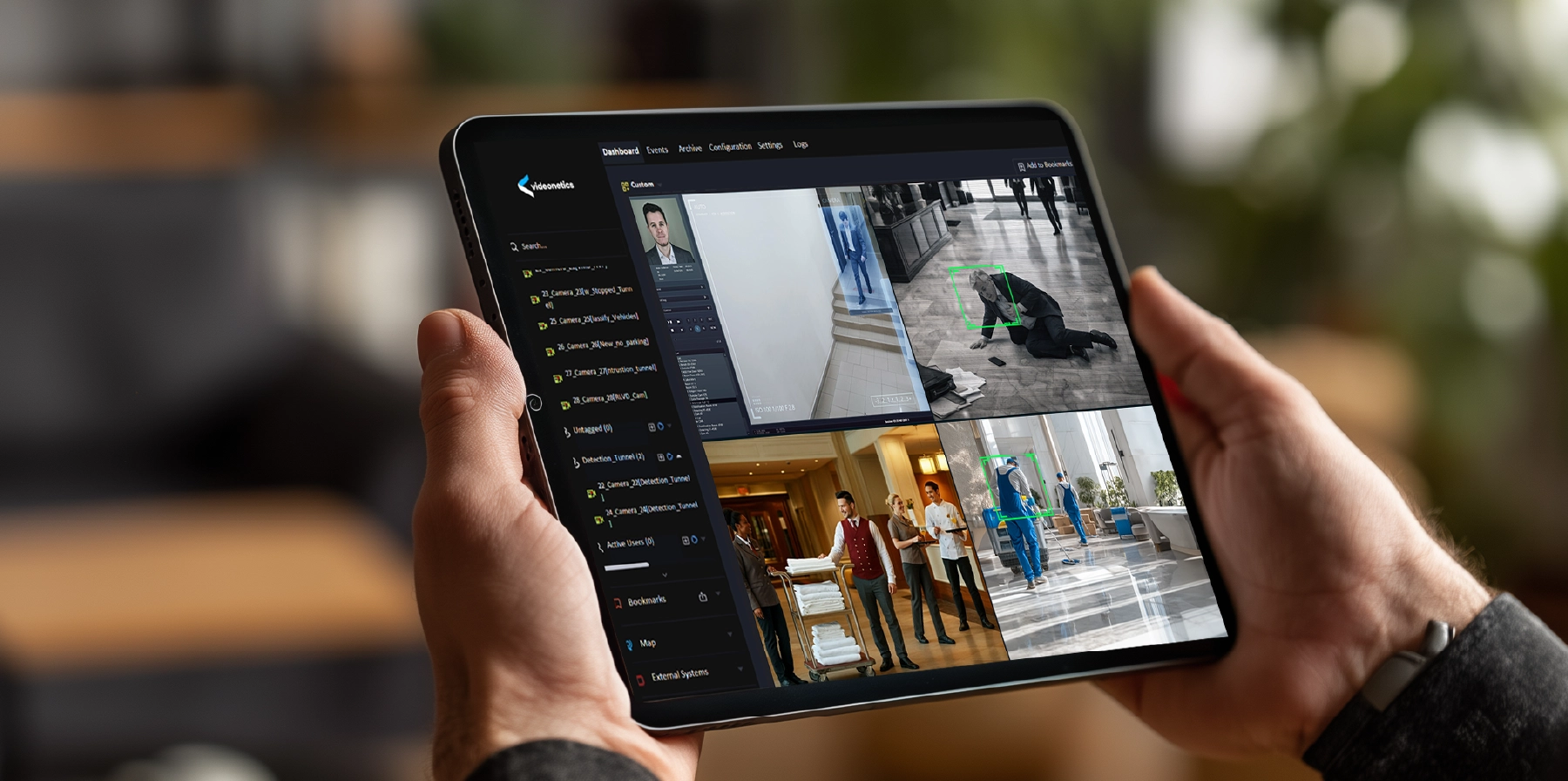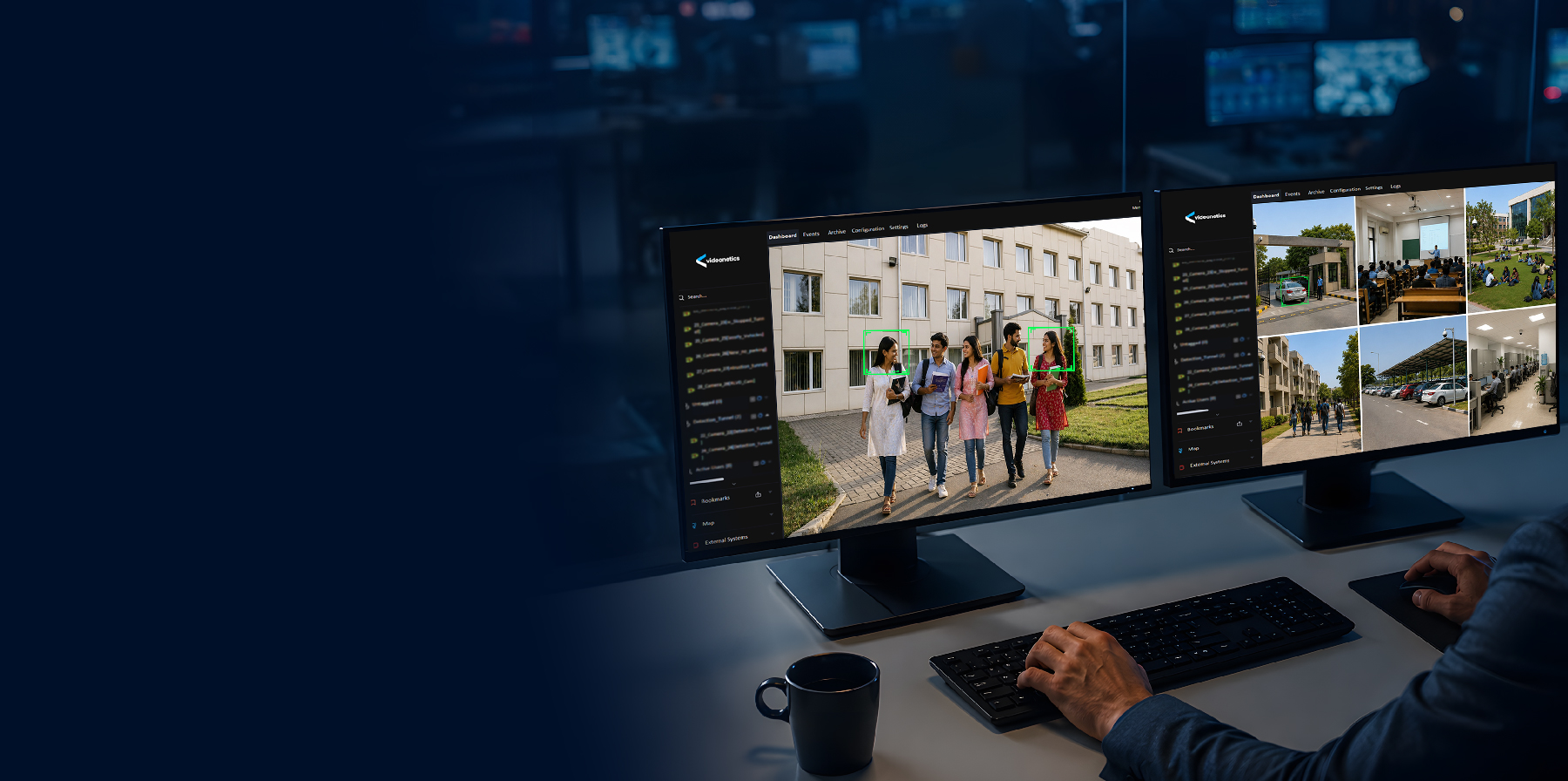
University campuses are becoming increasingly complex environments.
Today’s educational institutions manage thousands of students, faculty members, visitors, vehicles, hostels, libraries, research labs, and public spaces often operating 24/7 across multiple campus locations.
As campuses grow, traditional video surveillance security systems are no longer enough.
Recording incidents after they happen does little to prevent security threats, improve response time, or manage operational risks in real time. Universities are now shifting toward AI-powered video intelligence to build smarter, safer, and more operationally efficient campuses.
Recent incidents across Indian educational institutions have highlighted growing concerns around campus safety, emergency preparedness, and real-time monitoring capabilities.
In 2025 alone, multiple schools across Delhi, Noida, and Bengaluru received bomb threat emails that triggered mass evacuations and emergency responses, exposing the need for faster threat detection, coordinated monitoring, and centralised security visibility.
Several universities have also faced incidents involving campus violence, unauthorised intrusions, hostel assaults, and student safety concerns. At BITS Pilani, the institution reportedly expanded surveillance infrastructure with nearly 600 CCTV cameras following multiple student deaths and increasing pressure around campus safety oversight.
In another major incident, nearly 4,000 students at a private university in Madhya Pradesh were involved in violent unrest linked to hostel conditions and inadequate crisis management, highlighting the operational challenges institutions face during large-scale student disturbances.
Concerns around student violence, restricted-area breaches, hostel intrusions, and inadequate entry monitoring are also increasingly being reported across campuses nationwide.
These incidents are also reshaping how institutions approach video surveillance for schools and higher educational campuses across India, further accelerating the shift toward AI-based video analytics systems that can help institutions move beyond passive monitoring toward proactive situational awareness, faster response, and stronger campus-wide operational control.
Most universities already have extensive video surveillance security systems in place. However, many legacy video surveillance security systems still depend heavily on manual monitoring and fragmented infrastructure. The challenge is not visibility — it is awareness. Security teams cannot realistically monitor hundreds of video feeds continuously. As a result, incidents such as:
Unauthorised access
Student altercations
Fire or smoke events
Crowd congestion
Perimeter breaches
are often detected only after escalation.
AI-powered video analytics changes this model by continuously analysing live video streams in real time.
Modern AI-based video analytics solutions can help universities improve both campus security and operational visibility simultaneously.
Instead of relying entirely on manual monitoring, intelligent systems can automatically detect suspicious activity, crowd build-up, intrusion attempts, smoke signatures, and unusual movement patterns — helping campuses respond faster.
Universities today face far more serious security and operational threats than traditional surveillance systems were designed to handle.
AI-powered video intelligence is increasingly being adopted to help institutions identify, assess, and respond to high-risk situations in real time.
Key critical concerns include:
One of the biggest security priorities for schools and universities today is maintaining strict monitoring across entry and exit points for students, visitors, vendors, staff, vehicles and delivery personnel. This is where many educational institutions are increasingly investing in AI-powered video intelligence.
Using a combination of:
AI video analytics
Face Recognition Systems (FRS)
Vehicle intelligence
Access control integration
Visitor management systems
institutions can improve identity verification, monitor unauthorised access attempts, and strengthen overall campus entry security.
Demand is particularly growing for systems capable of:
Tailgating detection
Loitering detection
Restricted area monitoring
Visitor tracking
Student movement monitoring
Real-time alert generation
These capabilities help security teams respond proactively instead of relying solely on manual supervision.
Educational institutions frequently host annual functions, convocations, sports events, cultural programs, parent gatherings and public events. During such events, security teams are often insufficient to manually monitor large crowds across expansive campus environments.
AI-powered crowd intelligence helps institutions improve:
Crowd visibility
Child safety monitoring
Crowd density analysis
Panic movement detection
Emergency coordination
Missing person or student tracking
This becomes especially critical in ensuring student health, safety, and faster response during high-footfall situations.
Large campuses often have multiple entry and exit points, making unauthorised access difficult to monitor manually. AI-powered perimeter analytics can detect:
Intrusion attempts
Fence breaches
Suspicious late-night movement
Unauthorised access near hostels, labs, or restricted zones
This helps security teams respond before incidents escalate.
Student altercations and aggressive incidents can escalate rapidly in crowded campus environments. AI-enabled behavioural analytics can identify:
Aggressive movement patterns
Physical confrontations
Sudden crowd formation
Panic-triggered movement
allowing security personnel to intervene faster.
Research laboratories, electrical rooms, and technical facilities carry elevated operational risk.
AI-powered video analytics can help identify:
Smoke signatures
Fire outbreaks
Hazardous activity patterns
Safety violations in sensitive areas
enabling quicker emergency response.
During emergencies, overcrowding and panic movement can create severe safety risks. AI-driven crowd intelligence can support:
Real-time crowd density monitoring
Evacuation route visibility
Congestion identification
Faster emergency coordination
particularly during large events or crisis situations.
Universities manage expensive infrastructure including:
Research equipment
Laboratories
Libraries
Data centres
IT assets
AI-enabled surveillance can help identify suspicious activity, loitering, or unauthorised movement around critical infrastructure.
Large campuses often contain isolated zones with limited physical supervision, including:
Parking structures
Remote pathways
Residential blocks
Utility zones
Construction areas
AI-powered monitoring improves visibility across these vulnerable areas without requiring extensive manual deployment.
As digital infrastructure expands, demand for intelligent video surveillance for schools is increasing across both private and public educational institutions.
Universities are increasingly adopting AI-powered surveillance not just for safety, but for operational efficiency.
AI video intelligence can support:
Occupancy analytics
Infrastructure utilisation tracking
Attendance workflows
Visitor management
Campus mobility optimisation
Centralised multi-campus monitoring
This helps institutions improve operational visibility while optimising infrastructure investments.
Many institutions are also exploring cloud based video surveillance to centralise monitoring across distributed campuses and reduce infrastructure complexity.
Combined with cloud-based video surveillance capabilities, institutions can securely scale visibility, storage, and remote monitoring operations across multiple locations.
As universities adopt facial recognition and AI-enabled monitoring, privacy and ethical governance become critical. Institutions must ensure strong cybersecurity frameworks, controlled access governance, responsible biometric data handling, compliance with privacy regulations and transparent AI deployment policies.
Balancing campus safety with trust and accountability is essential for long-term adoption.
The future campus will not simply be digitally connected; it will be operationally intelligent. AI-powered video intelligence is helping universities:
Improve campus-wide visibility
Accelerate incident response
Automate security operations
Reduce monitoring blind spots
Enhance student and staff safety
Scale operations across distributed campuses
As educational institutions modernise infrastructure, AI-powered campus security is rapidly becoming a foundational component of smart campus transformation.
At Videonetics, we believe video should function as more than passive surveillance.
Our AI-powered Video Intelligence Platform combines:
Automatic Number Plate Recognition (ANPR)
VSaaS capabilities
within a unified platform designed for modern educational institutions.
From crowd analytics and perimeter monitoring to hostel access management and multi-campus command centres, the platform helps universities improve operational awareness and campus safety in real time.
With over 17 years of AI innovation and deployments across smart cities, transportation, government infrastructure, and institutions, including the Indian Institute of Technology Delhi & Palakkad, Videonetics continues to help organisations transform video infrastructure into actionable intelligence.