Ports are the backbone of global trade, handling over 80% of global merchandise trade by volume and around 70% by value, according to UNCTAD. With global container throughput exceeding 880 million TEUs annually, ports are under immense pressure to process growing cargo volumes while reducing vessel turnaround time, minimizing congestion, strengthening security, improving workforce safety, and meeting ambitious sustainability goals. At the same time, shipping lines and logistics providers expect faster, more transparent, and highly efficient operations to keep global supply chains moving seamlessly.
India is experiencing this transformation at an unprecedented pace. The country's major ports collectively handled over 855 million tonnes of cargo in FY 2024–25, while cargo traffic across all Indian ports exceeded 1.6 billion tonnes, reflecting the rapid expansion of maritime trade and logistics. Backed by initiatives such as Sagarmala, the Maritime India Vision 2030, and increasing investments in smart port infrastructure, Indian ports are accelerating the adoption of Artificial Intelligence (AI), IoT, automation, and Digital Twins to improve operational performance and global competitiveness.
Today, True AI-powered video intelligence is transforming conventional surveillance systems into intelligent operational platforms. By converting video data into real-time operational intelligence, these technologies enable ports to strengthen situational awareness, optimise cargo movement, improve workforce and maritime safety, and enhance operational resilience — enabling faster, data-driven decision-making across the port ecosystem.
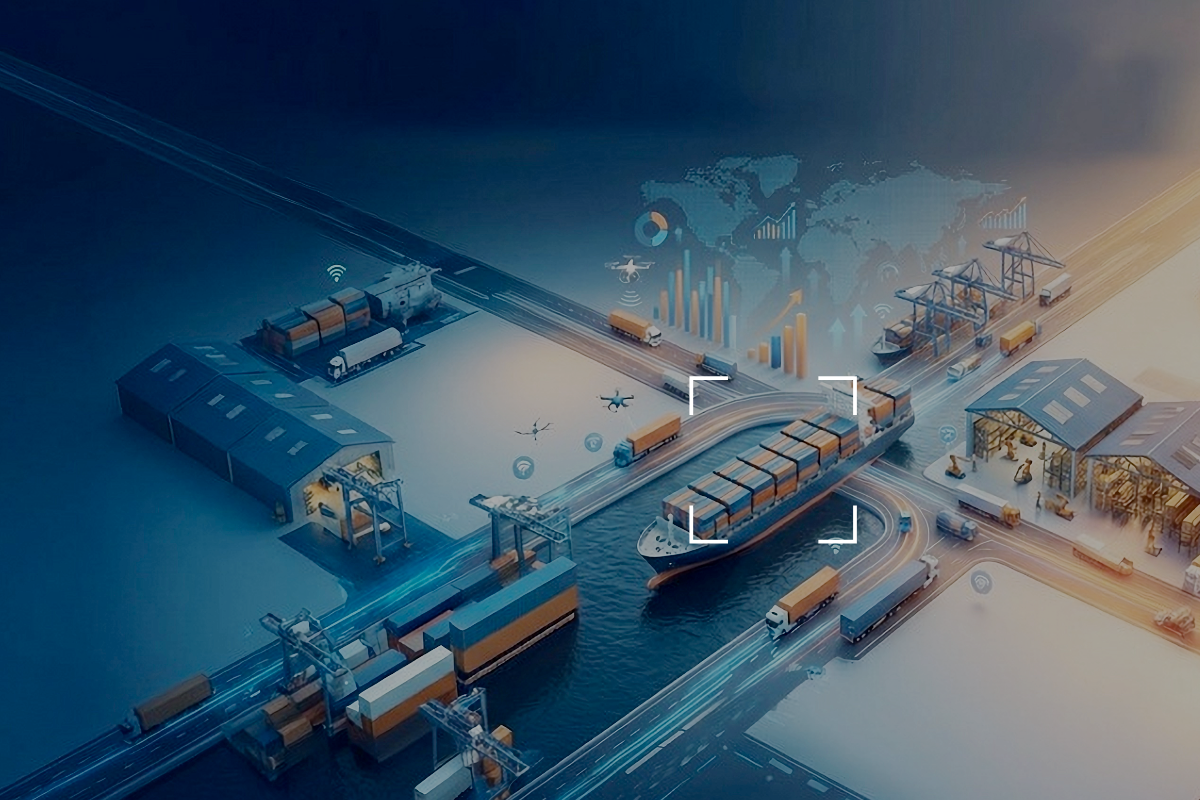
Modern ports are no longer just cargo-handling facilities. They are highly dynamic ecosystems where shipping companies, terminal operators, customs authorities, logistics providers, railways, transport agencies, warehouses, and security teams operate simultaneously. Every day, thousands of trucks, containers, cranes, forklifts, vessels, and personnel move across vast operational areas, making coordination increasingly complex.
A delay at one stage — vessel berthing, gate processing, container handling, or yard operations — can quickly cascade across the supply chain, increasing operational costs and reducing throughput. Maintaining real-time situational awareness across such a large and dynamic environment has become one of the biggest challenges for port authorities responsible for critical infrastructure protection.
Growing cargo volumes often lead to berth congestion, delayed vessel arrivals and departures, higher fuel consumption, and disruption to downstream logistics networks.
Poor visibility into container locations, inefficient stacking practices, and manual inventory tracking reduce yard capacity and delay cargo movement. Locating the right container at the right time remains a significant operational challenge.
Ports see continuous movement of trucks, trailers, forklifts, cranes, and other heavy equipment. Without real-time traffic monitoring, congestion at entry gates and internal roadways increases idle time, and reduces efficiency.
Workers frequently operate near heavy machinery, moving vehicles, suspended loads, and hazardous materials. Monitoring PPE compliance, restricted area access, and unsafe behaviours is essential to minimising workplace accidents.
Ports span vast geographical areas with multiple access points, making them vulnerable to unauthorized access, cargo theft, perimeter intrusion, vandalism, and smuggling. Monitoring hundreds or thousands of CCTV cameras is both resource-intensive and prone to human error.
Operational data is often scattered across surveillance systems, access control, terminal operating systems (TOS), IoT devices, traffic management platforms, and logistics applications. This fragmentation makes it difficult to obtain a unified, real-time view of traffic, cargo movement, security events, and workforce activities. Without seamless integration, port operators face delayed incident response, limited situational awareness, and slower, data-driven decision-making.
Reducing emissions, minimising idle time, optimising equipment utilization, and complying with environmental regulations all require continuous operational visibility and data-driven optimisation.
Artificial Intelligence enables ports to shift from reactive operations to proactive, data-driven management. By combining AI-powered video intelligence with context-aware analytics, ports can move beyond event detection to understand the context behind operational activities — enabling more accurate alerts and informed decision-making.
Rather than merely recording incidents, this approach transforms existing surveillance infrastructure into an intelligent operational platform that improves efficiency, enhances safety, strengthens security, and supports faster decision-making.
Modern AI video intelligence is evolving from event detection to predictive operational intelligence. Instead of simply identifying incidents after they occur, it analyses historical patterns, movement trajectories, traffic density, and behavioural anomalies to anticipate operational disruptions before they escalate. This predictive capability lets port operators to optimise resources, reduce delays, and act proactively to improve throughput and resilience. Powered by deep learning, behaviour analytics, object classification, and multi-object tracking, AI enables ports to detect anomalies, understand complex operational scenarios, and support proactive decision-making.
AI-powered video analytics combines object classification, virtual tripwires, and behaviour analytics to continuously monitor port boundaries — detecting fence jumping, unauthorized human or vehicle entry, loitering, abandoned objects, and other suspicious activity to strengthen critical infrastructure protection.
Computer vision models detect and classify boats, ships, and floating objects entering restricted waterways. AI identifies unauthorized vessel movements, wrong-way navigation, and suspicious maritime activities to strengthen coastal security.
Deep learning-based ANPR automatically recognises vehicle license plates under varying lighting and weather conditions. Combined with vehicle authentication and whitelist/blacklist verification, it automates gate operations and strengthens access security.
Computer vision detects, classifies, and tracks vehicles by type, colour, speed, direction, and trajectory. Combining multi-object tracking, real-time traffic density analysis, queue length estimation, vehicle counting, and congestion monitoring with detection of over-speeding, wrong-way movement, and illegal parking helps ports optimise traffic flow, enhance gate efficiency, improve road safety, and keep cargo and transport vehicles move smoothly.
Optical Character Recognition (OCR) automatically reads container IDs, ISO codes, and cargo markings from live video streams improving inventory accuracy, cargo traceability, and terminal throughput while minimising manual intervention.
Real-time people detection, occupancy estimation, people counting, and crowd density analysis across terminals, warehouses, and operational areas, help optimise workforce management and emergency preparedness.
Integrating face recognition with the Video Management System (VMS), and access control lets ports verify the identity of employees, contractors, and visitors while managing secure entry and exit across critical facilities. The system can detect unauthorized access attempts, identify tailgating, correlate access events with live video evidence, and generate real-time alerts for blacklisted individuals. Person re-identification further lets security teams trace an individual's movement across multiple cameras, accelerating investigations.
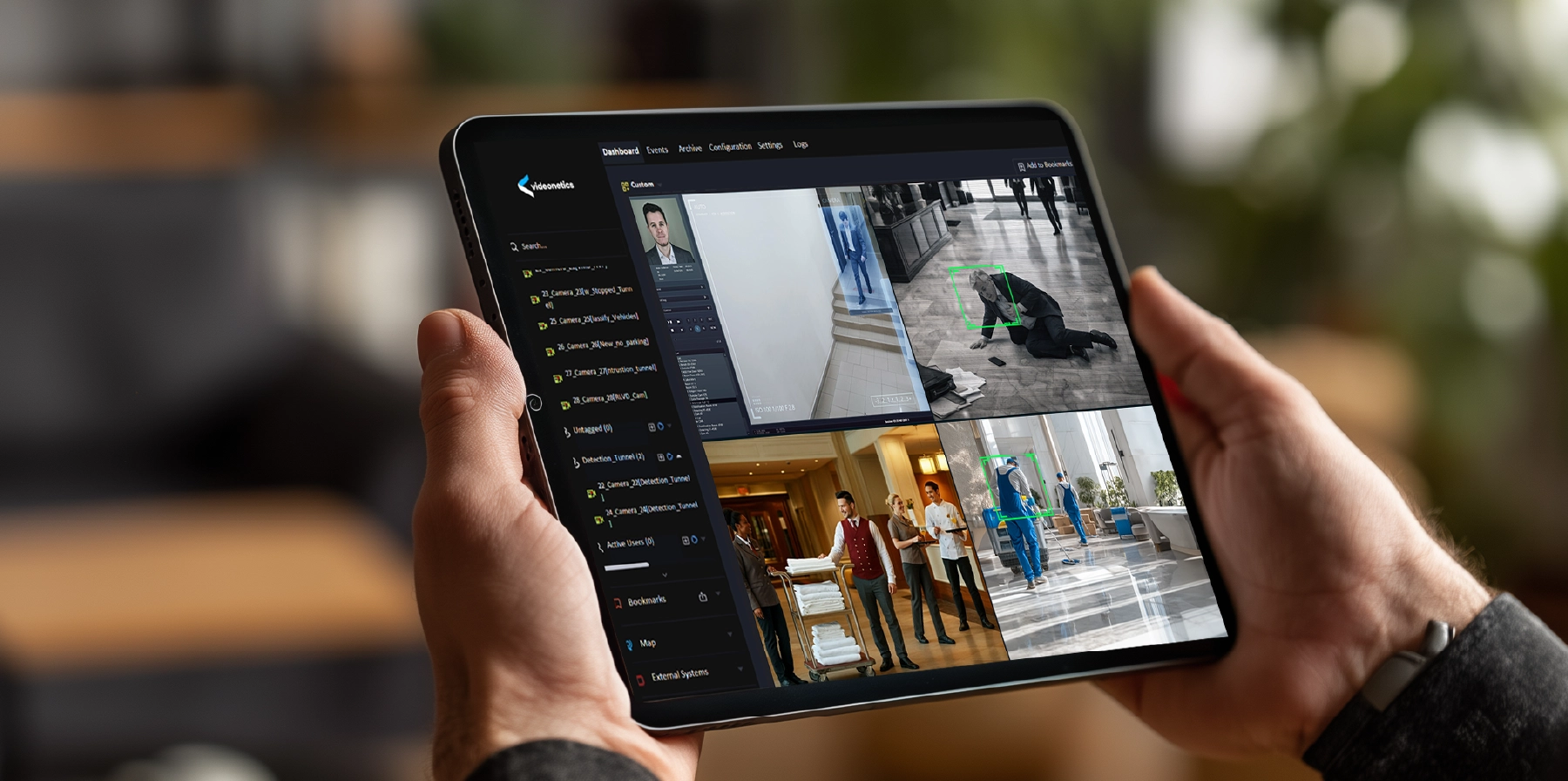
Continuous monitoring of PPE compliance, fall and slip detection, unsafe worker behaviour, and personnel entering hazardous or restricted zones helps create a safer working environment. Computer vision can also monitor interactions between workers and heavy equipment to flag potential risks in real time — generating instant alerts that speed emergency response and support proactive incident prevention.
Continuous monitoring of operational areas for fire, smoke, and other hazardous conditions enables faster incident response, minimizing risk to personnel, cargo, and infrastructure, and helping ports contain incidents before they escalate.
Bringing video analytics, ANPR, face recognition, access control, IoT sensors, and operational systems into a centralized command platform delivers real-time dashboards, incident correlation, geospatial visualization, and actionable operational intelligence.
Leading ports around the world are already demonstrating the transformative impact of AI — from major European and Southeast Asian hubs using AI, IoT, and Digital Twins to optimise berth allocation, vessel scheduling, and yard planning, to ports across East Asia applying predictive analytics to improve vessel arrival forecasting.
India is making significant strides of its own. Several major Indian ports have implemented AI-enabled OCR, RFID-based automation, and intelligent vessel traffic management to improve gate operations and maritime safety, while others are piloting Digital Twin platforms that integrate AI, IoT sensors, drones, LiDAR, and CCTV for real-time operational monitoring and predictive decision-making.
The future of port operations won't be determined by how many cameras are deployed, but by how intelligently those cameras interpret the environment. As AI-video intelligence continues to converge with Digital Twins, IoT, automation, and video intelligence platforms, video data will evolve from a passive recording tool into a real-time operational sensor — enabling predictive, connected, and autonomous port operations.
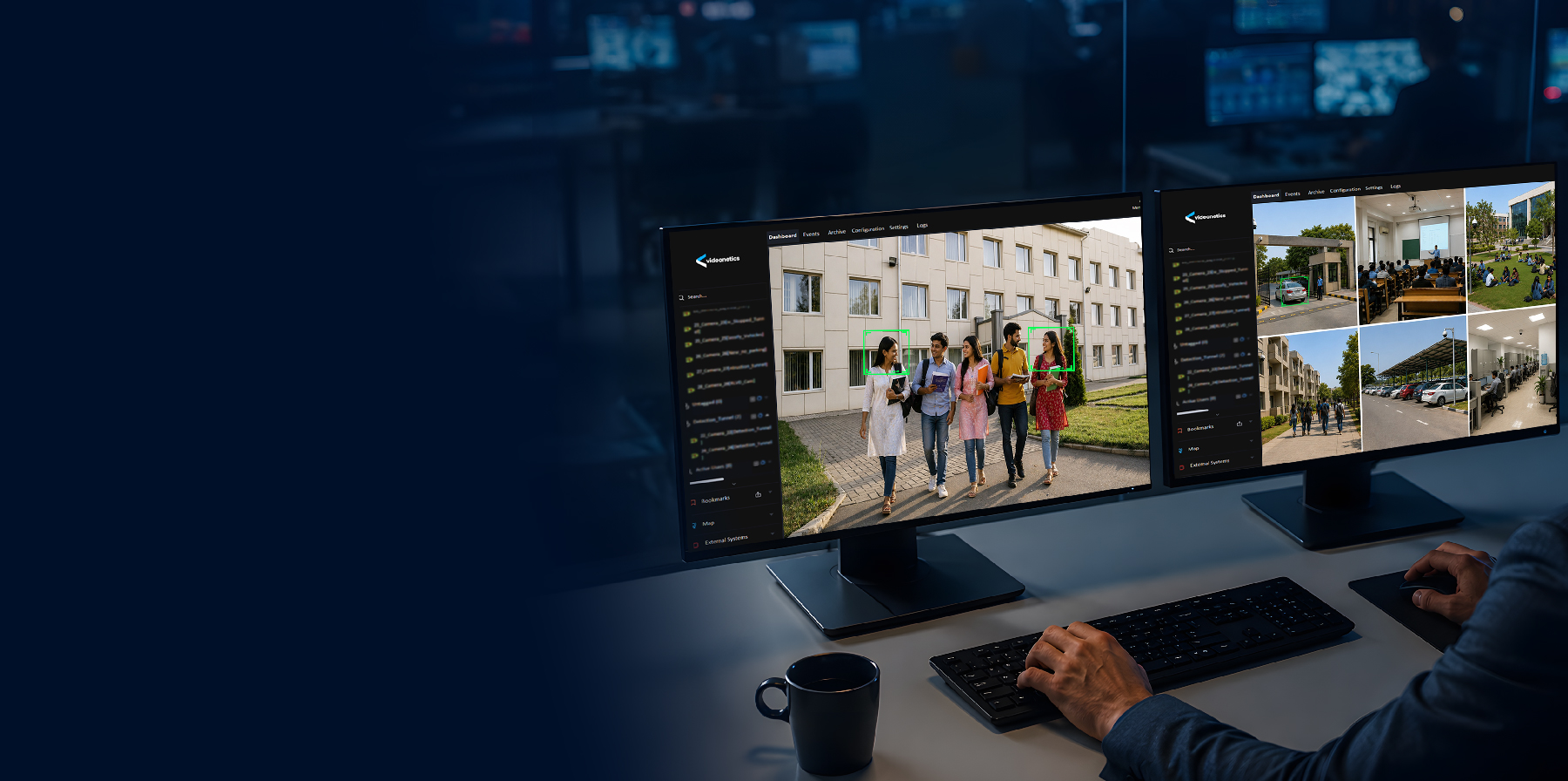
Videonetics' True AI & Deep Learning-powered Unified Video Management Platform integrates Video Management System (VMS), AI-enabled Video Analytics (VA), Face Recognition System (FRS), and Automatic Number Plate Recognition (ANPR) into a single, scalable, ONVIF-compliant solution. From perimeter protection and intrusion detection to unauthorized vessel monitoring, container identification, PPE compliance, traffic analytics, face recognition, and centralised command and control, the platform gives ports real-time situational awareness and actionable intelligence.
The result: improved operational efficiency, enhanced safety and security, better asset protection, and faster, data-driven decision-making—helping build the next generation of intelligent, connected, and future-ready ports.