Every minute of every day, the world generates a staggering volume of visual data. Surveillance cameras, IoT sensors, connected devices, and operational systems across cities, campuses, factories, and retail environments produce more footage than any human team could ever meaningfully review. As this torrent of data grows, so does the pressure on businesses and institutions to extract genuine intelligence from it — quickly, accurately, and at scale.
Traditional video surveillance monitoring was built for a different era. It relied on human operators watching banks of screens, manually flagging incidents, and reacting after the fact. This approach is not just inefficient — it is fundamentally incompatible with the speed at which modern threats, operational disruptions, and business opportunities emerge. Fatigue, distraction, and human cognitive limits mean critical events get missed, responses arrive too late, and decisions are grounded in incomplete information.
The transformation engine for this challenge is artificial intelligence. By applying deep learning, computer vision, and predictive analytics to live and recorded video streams, AI converts passive footage into proactive, actionable intelligence — enabling organisations to move from reactive scrambles to confident, data-driven decisions.
Not all AI is created equal. The marketplace is crowded with products that apply basic automation — rule-based triggers, simple motion detection, or keyword filtering — and label themselves as "AI." True AI solutions are defined by a fundamentally different set of characteristics: they are practical, scalable, highly accurate, and, critically, they learn and improve continuously.
Where basic automation responds to pre-programmed rules, true intelligence understands context. A crowd management system built on real AI does not just count people — it interprets behaviour patterns, identifies abnormal clustering, cross-references historical crowd flow data, and recommends preventive action before congestion becomes a crisis. This is the difference between a trigger and a thought.
Videonetics has built its platform around exactly this philosophy. Its AI-Enabled Video Analytics engine does not simply detect objects — it interprets scenes, tracks behavioural trajectories, and surfaces insights that empower decision-makers to act with conviction rather than guesswork.
Speed is the currency of modern operations. When an unauthorised individual enters a restricted zone, when a queue at a retail checkout exceeds acceptable thresholds, or when a vehicle breaches a perimeter at a logistics hub, the window for effective response is measured in seconds — not minutes. AI-Enabled Video Analytics delivers instant, contextualised alerts directly to the right decision-makers, compressing the gap between detection and response to near zero.
Beyond reacting to what is happening, true AI forecasts what is about to happen. By continuously analysing historical and live data streams, AI in security and surveillance platforms can identify emerging threat signatures, predict operational bottlenecks, and recommend preventive actions before problems materialise. This shifts organisations from a culture of crisis management to one of proactive governance.
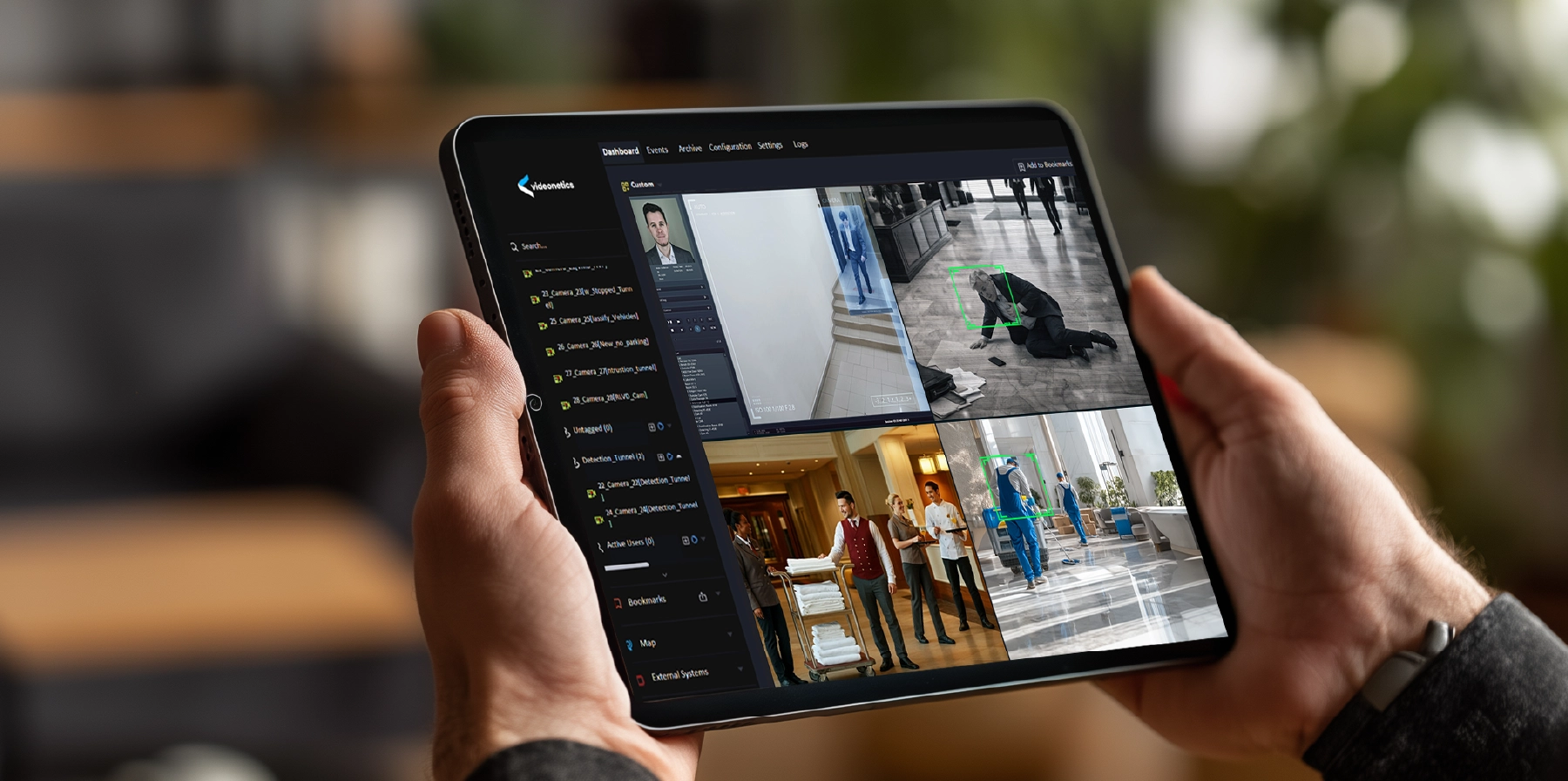
Evidence-based decision-making eliminates the uncertainty that plagues manual operations. When video intelligence platforms synthesise data across hundreds or thousands of camera feeds simultaneously, every alert and recommendation is grounded in verifiable, real-time evidence — not instinct or memory. The result is decisions that are faster, more consistent, and operationally defensible.
The transformative potential of ai video analysis spans industries. Here is how intelligent video intelligence is reshaping decisions at scale across key sectors:
Smart Cities - Real-time video surveillance monitoring enables authorities to manage traffic signal optimisation, detect public safety incidents, and manage crowd density at events — all from a unified command centre.
Retail - AI video analysis decodes customer behaviour patterns, flags theft and shrinkage in real time, and optimises queue management — turning camera infrastructure into a revenue-protecting asset.
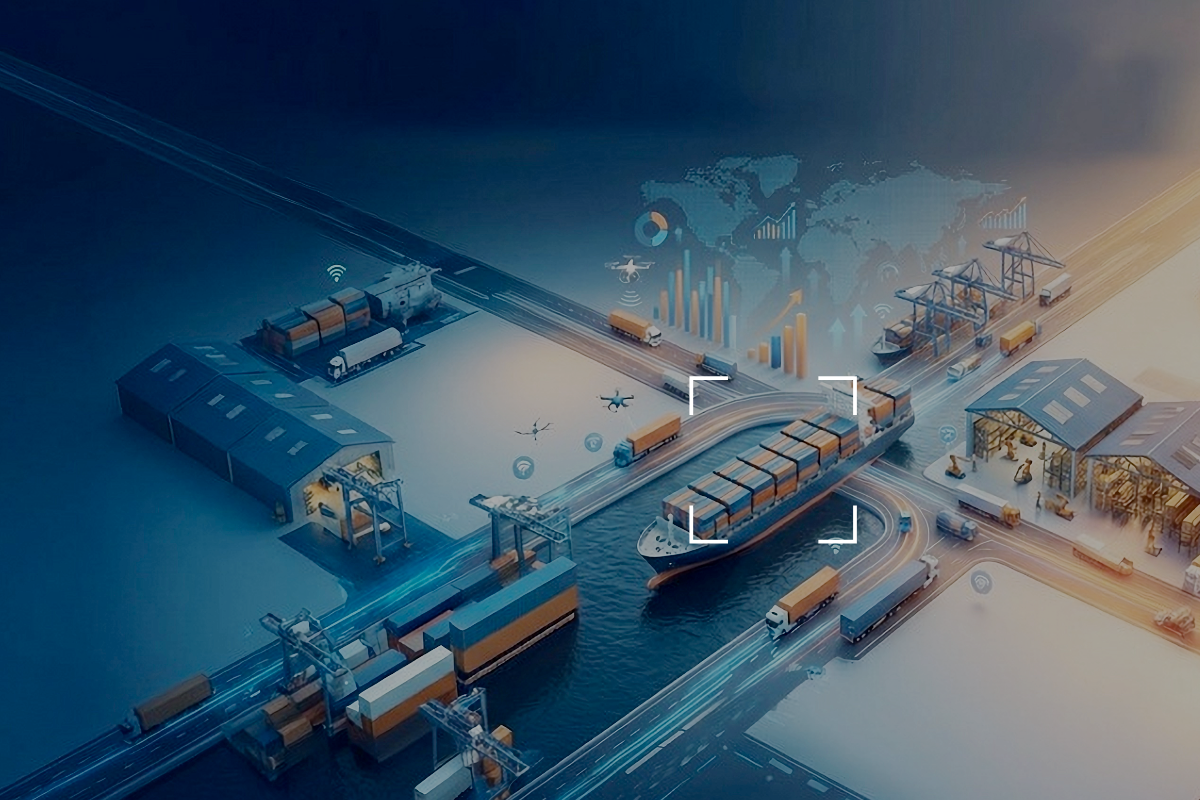
Transportation & Logistics - Fleet movement, route optimisation, dock allocation, and warehouse throughput are all elevated by AI in security and surveillance platforms that correlate video data with operational systems.
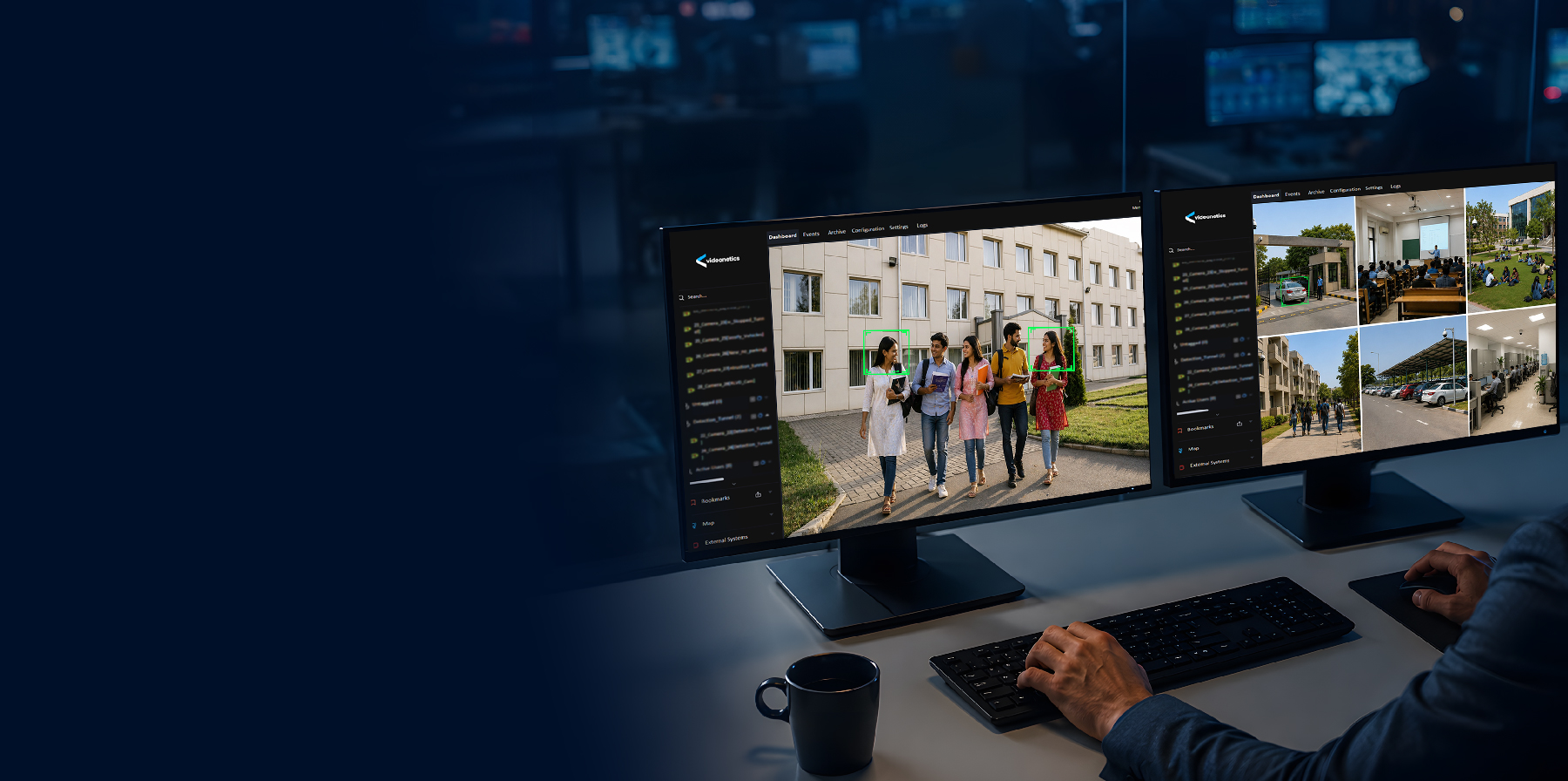
Enterprises & Campuses - Intelligent access control, AI-Enabled Video Analytics for perimeter security, and productivity insights help enterprise leaders maintain safety and operational excellence across complex, multi-site environments.
One of the most compelling arguments for AI-powered video intelligence is its ability to leverage the camera infrastructure organisations already own. The vast majority of enterprises, cities, and institutions have invested significantly in physical surveillance hardware over the past decade. Without AI, that investment yields passive footage — an archive of events that have already occurred.
With AI in security and surveillance, that same infrastructure becomes a living intelligence network. Cameras cease to be recorders and become sensors. Footage ceases to be evidence and becomes strategy. Video data transitions from a sunk cost into one of the most valuable strategic assets an organisation possesses — continuously generating insights that inform security posture, operational efficiency, and customer experience simultaneously.
Organisations that commit to genuine AI transformation across their video intelligence infrastructure realise a compelling range of measurable benefits:
Faster decisions with real-time intelligence
Reduced operational & security costs
Stronger, proactive security posture
Measurable operational efficiency gains
Improved customer experience outcomes
Scalable growth without proportional headcount
Each of these benefits compounds over time. As AI-Enabled Video Analytics systems ingest more data, their models become sharper, their predictions more accurate, and the intelligence they produce more contextually rich — creating a durable competitive advantage for early adopters.
The cost of inaction is often underestimated. Organisations that continue to rely on manual or basic automated approaches to ai video analysis face a growing set of structural disadvantages.
Delayed decisions— manual review cycles mean leadership acts on information that is already hours old
Monitoring fatigue— human operators lose alertness after 20 minutes of continuous monitoring, creating dangerous blind spots
Missed threats— without AI pattern recognition, subtle precursor behaviours that precede incidents go undetected
Higher costs— scaling security coverage manually requires proportional headcount, driving unsustainable operational expenditure
Inconsistent operations— decision quality varies dramatically between individuals, shifts, and locations, creating unpredictable risk exposure
Since 2008, Videonetics has been at the forefront of AI in security and surveillance innovation. As India's number one Video Management System provider and a consistent top-10 performer in Asia, the company has built a reputation for delivering True AI video intelligence at mission-critical scale.
Videonetics' unified platform integrates AI-Enabled Video Analytics, intelligent video management, face recognition, traffic intelligence, and VSaaS capabilities into a single, coherent architecture. This eliminates the fragmentation that undermines most enterprise security ecosystems, enabling every component to share data, context, and intelligence in real time.
With proven deployments across smart cities, airports, manufacturing facilities, banking institutions, and education campuses globally, Videonetics brings deep domain expertise to every engagement. Its solutions are not generic — they are purpose-built for industry-specific operational realities, ensuring that the intelligence delivered is directly relevant to the decisions that matter most in each context.
Critically, Videonetics' platform is built to scale. Whether an organisation is protecting a single campus or managing security and operational intelligence across hundreds of distributed sites, the architecture grows with the mission — without sacrificing speed, accuracy, or the quality of ai video analysis at any node in the network.
The trajectory of AI-Enabled Video Analytics points toward a future that is both more autonomous and more integrated than today's deployments.
Next-generation platforms will increasingly handle routine operational responses without human initiation — automatically rerouting traffic, triggering lockdown protocols, or adjusting staffing recommendations based on AI-detected conditions in real time.
Processing intelligence directly at the camera — rather than routing all data to centralised servers — will dramatically reduce latency, lower bandwidth costs, and enable reliable AI performance even in environments with limited connectivity.
The convergence of generative AI with video intelligence will enable natural language querying of video data — allowing security leaders to ask questions like "show me all instances of unattended baggage near Gate 7 in the last 48 hours" and receive precise, instant results.
The future of video surveillance monitoring lies in unified intelligence hubs that aggregate feeds, alerts, and analytics from across an organisation's entire physical and digital footprint — giving decision-makers a single, coherent operational picture.
As AI models become more sophisticated, they will deliver intelligence that is precisely tailored to each organisation's operational context, risk profile, and strategic priorities — moving beyond generic dashboards to genuinely personalised decision support.
The question facing business leaders, security professionals, and enterprise IT decision-makers is no longer whether to adopt AI-Enabled Video Analytics. It is how quickly they can move from passive surveillance to active intelligence — and whether they choose a partner with the platform depth, industry expertise, and proven scale to deliver on that transformation.
AI in security and surveillance has moved well beyond early-adopter territory. It is now a foundational capability for any organisation that competes, operates, or governs in a complex, fast-moving environment. Those who treat video data as a strategic asset, powered by genuine AI intelligence, will make better decisions, faster — and the compounding advantage of that position will only grow over time.
Videonetics exists to make that transformation accessible, scalable, and certain. With a platform built on True AI, proven across the world's most demanding deployments, and designed to keep learning and improving, Videonetics is the partner for organisations ready to stop watching and start deciding.